

Are the Trades One of the Few AI-Proof Growth Industries?
Key Takeaways
- The trades are hard to automate because the work is physical, unpredictable, and happens inside people's homes.
- AI isn't killing demand for the trades. It's driving it, because building AI takes enormous amounts of skilled labor.
- Nvidia CEO Jensen Huang has told electricians and plumbers directly: “This is your time.”
- The catch: a boom pulls in new operators and more first-time customers, which means more exposure to non-payment, wasted trips, and bad jobs.
- The operators who win a boom are the ones who protect their margin and choose who they work with.
The trades are one of the few AI-proof growth industries in the market - at least, by the two tests that matter when measuring AI's impact:
- Can work be automated?
- Is demand for the industry growing?
Think about it. A robot can't crawl under a house to find a leak, and the companies who want to lead in the AI race need electricians and plumbers to build the infrastructure required to keep them ahead.
If you run a home-service business, most of what you're hearing about AI and the trades is good news. But when you look past the headlines, you may be missing the whole story. And knowing that is what's going to set some tradespeople and operators up for success.
Why Can't AI Do This Job?
There's a reason that the trades are going to thrive in the AI world: they're hard to automate - at least to the level that all involved are comfortable with.
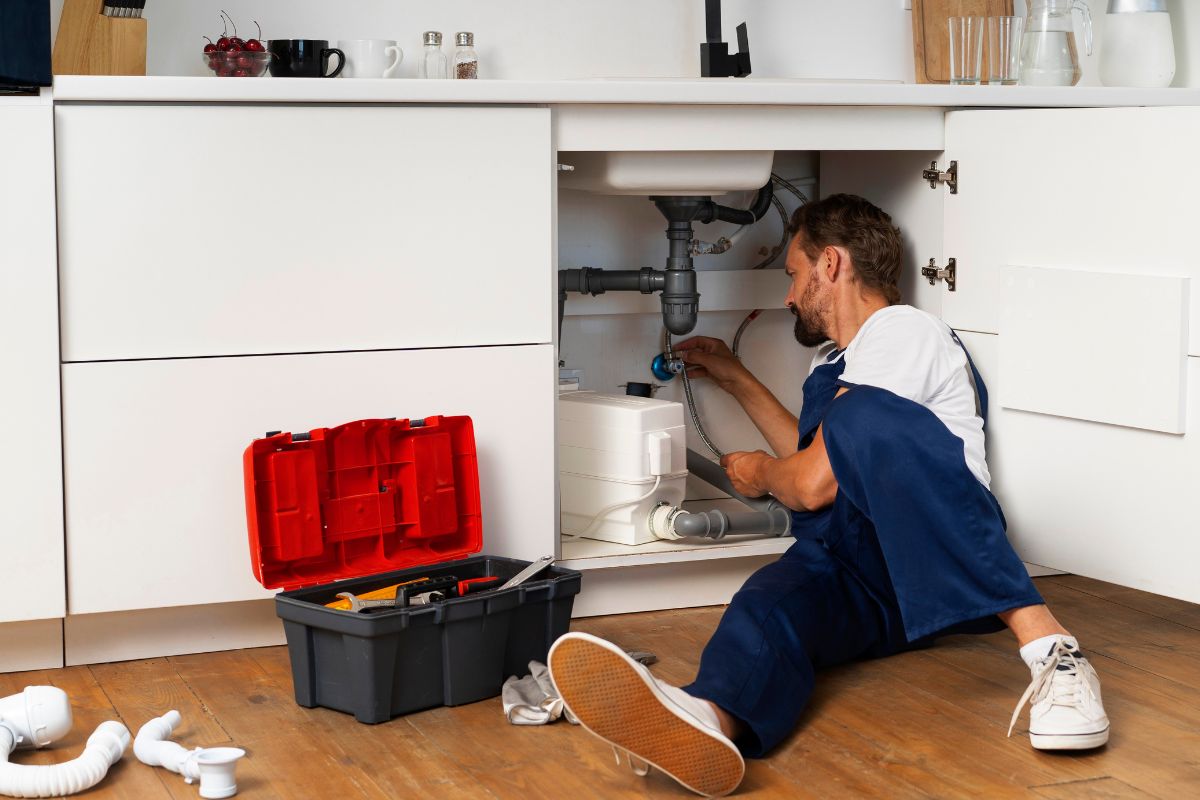
Homes are a huge investment, and homeowners want to make sure that they make the most of it. So when something goes wrong - or help is needed - someone with skill has to physically show up.
Someone has to open up a panel or find the leak behind the wall. And someone has to make a judgment call when the issue doesn't quite add up to the first (or second) solution.
Most importantly, operators have to come with a sense of trust that they are safe to work with and will do the job they've been hired to do.
That's not to say that AI doesn't have a place in the trades. AI is good at a lot of things now, and many plumbers, electricians, and handymen are using AI in their systems to optimize and make things efficient.
But when it comes to the human skill side of things, AI is nowhere near the level needed. The work is physical, and the conditions can suddenly change on every job. The entire transaction runs on trust.
When a customer lets a real person into their home, there isn't software that automates the trust and experience that walks through the door.
That's the first half of what people mean by “AI-proof.” But it's the second half of the story that caught everyone off guard.
How Is AI Growing the Trades?
The very technology that's supposedly "coming for everyone's job" might be the very reason that the trades are booming.
Think of what it takes to have AI in the first place: building AI takes... buildings! Buildings that act as data centers, chip factories, and power systems. Each has to be constructed and wired. They have to be plumbed. They have to be maintained.
That need is growing fast. Companies are now pouring hundreds of billions of dollars into AI infrastructure this year, and every dollar of it needs skilled hands to turn that investment into something tangible.
Nvidia's CEO, Jensen Huang, has been saying this out loud for a year. At Carnegie Mellon's commencement in May 2026, Huang encouraged against AI doom - especially in the trades: “AI gives America the opportunity to build again. Electricians, plumbers, ironworkers, technicians, builders—this is your time.”
Speaking to Channel 4 News in the UK, Huang was more specific: “If you're an electrician, you're a plumber, a carpenter—we're going to need hundreds of thousands of them to build all of these factories.”
His read on where the work is headed? “The skilled craft segment of every economy is going to see a boom.”
Huang isn't alone in his sentiment. In July 2026, Bloomberg reported that AI anxiety is steering a wave of workers toward the trades. There's a sharp rise in interest in training for welding, plumbing, and carpentry. Many see the trades as a safe harbor against an uncertain vocational future.
Fortune notes that a single large data center can employ up to 1,500 construction workers during its build-out. And many of those workers are earning six figures without a college degree.
For once, the big-picture story and the on-the-ground story agree: The trades are ascendant.
What's the Catch for Operators?
But there's a part of this that doesn't make the headlines. A boom doesn't just mean more work. It also means there will be that many more operators chasing that work.
There will be brand new businesses opening that haven't been burned yet, serving more homes than ever. More strangers, more first-time customers, and much more exposure to the ones who cost you money. Growth and risk tend to show up together - and not always in equal measure.
The thing that makes the trades AI-proof? You have to physically enter someone's home and be trusted there. That's the same thing that makes a bad customer a real threat.
You can't screen a homeowner through a screen. You get the job, do your due diligence, and then do the work. Only during or afterward do you learn if they're going to pay and stick to the original scope.
A bad customer rarely costs you just the unpaid invoice. The hidden costs of a bad customer pile up in wasted trips, chased payments, disputed charges, and more long after the job is complete.
When the work is scarce, you're much more likely to take every job - and the risks that come with them. But when work is booming, taking every job is a choice. The operators who treat it like one are the ones who come out ahead.

How do the operators who win a boom protect themselves?
The winners in a growth market are those who know how to navigate it as it changes. They're the ones who work the right jobs and get paid for all of them. And in practice, that comes down to three habits.
Pick your customers before the truck rolls
The most expensive mistake in home service is finding out who a customer really is after you've completed the work. A smarter move is to review the homeowner before you take the job, the same way a homeowner would check your reputation before hiring you. And with Resident Review, you have that capability in your hands.
Build a track record (and read everyone else's)
Remember: a homeowner can be new to you but not new to your trade. Are they a good customer who will work with you and leave a glowing review? Will they recommend you to their friends and family? Or are they a headache waiting to happen?
Reviewing customers after a job and checking their history before the next one is a habit sharp operators already run in their own shops. It's why smart electrical contractors ask for reviews before and after the job, and it works far better when every verified operator in your area is doing the same.
Yelp and Google let homeowners review your business. Resident Review lets home-service businesses review the homeowner, so you can see a resident's history with other operators before you ever accept the job.
Run a tighter operation as you grow
A boom is exactly when loose scheduling and customer tracking start costing real money. Keeping your jobs and customers in one place, instead of in your head and a glovebox notebook, is how you keep growth from outrunning you.
Corey Chase, who founded Resident Review, wrote an entire book on this tension. A growing operator can't afford to gamble on the wrong customer. The trades are rising, and your goal should be to rise with them (and keep more of what you earn).

Resident Review Helps You Protect Your Most Important Investment - Yourself
Companies like Yelp and Angi already let homeowners review your business. Resident Review flips that by creating one of the first platforms where home-service businesses can review homeowners.
After a job, a verified operator on Resident Review can leave a review on the resident. How well did they communicate? Did they pay the invoice on time? Was the home safe and as expected when you arrived?
Before the next operator takes a job at that address, they can read your review and decide if the job is right for them. Meanwhile, you're reading reviews of homes you may be visiting for a call - a mutual-reward system that keeps everyone honest and protected in the trades.
You never know what's around the corner, and AI is changing faster than any other industry. But there's a pretty good chance that the trades will be the growth story of the AI era. But a rising market rewards the operators who protect their piece of it.
Make sure that you count yourself among those tradespeople who get paid what they deserve and avoid the jobs that drain you of your energy and resources. The demand is coming, so make sure the customers behind it are worth your time.
Get on Resident Review and see who you're working with before your next job.
Frequently Asked Questions
Will AI replace skilled trades like plumbing and electrical?
It's not likely, at least not in any realistic near-term scenario. Plumbing and electrical work is physical. It changes from job to job, and good work depends on being trusted within someone's home. None of those are possible with today's AI or robotics. If anything, AI is increasing demand for the trades.
Why is AI increasing demand for the trades?
Building AI requires physical infrastructure. That means you need data centers and chip factories to grow the industry. You also need power and water systems to maintain it all. All of that needs to be constructed and maintained by skilled workers. Industry leaders expect the build-out to need hundreds of thousands of them.
What did Nvidia's CEO say about the trades?
At Carnegie Mellon's May 2026 commencement, Jensen Huang spoke on the impact of AI on vocations. In particular, Huang said that electricians, plumbers, and builders are poised to succeed in this moment: “...this is your time." Huang forecasts a boom in the skilled crafts driven by the need for more AI infrastructure.
If the trades are growing, why should I screen my customers?
As anyone knows, a boom means more work - and more risk. More first-time customers means more exposure to non-payment, scope creep, wasted trips, and other risks. Screening who you work with is how you keep the growth profitable and prevent yourself from running afoul of reputation-ruining red flag customers.
Comments (0)
No comments yet. Be the first to share your thoughts!
Leave a Comment
Please log in to post a comment. Guest comments are not enabled here.
Login to Comment